This is an abbreviated educational map, not a single standard path for actual fabrication. Sequences, repetitions, and materials differ between memory and logic, products, and process generations. Oxidation, ion implantation, heat treatment, planarization, interconnect formation, and other operations are not all shown as separate nodes. Companies illustrate roles based on public products and technologies; they are not lists of exclusive suppliers or verified counterparties. Economic significance and watch points are principle-based educational interpretations, not forecasts of earnings or share prices or investment recommendations.
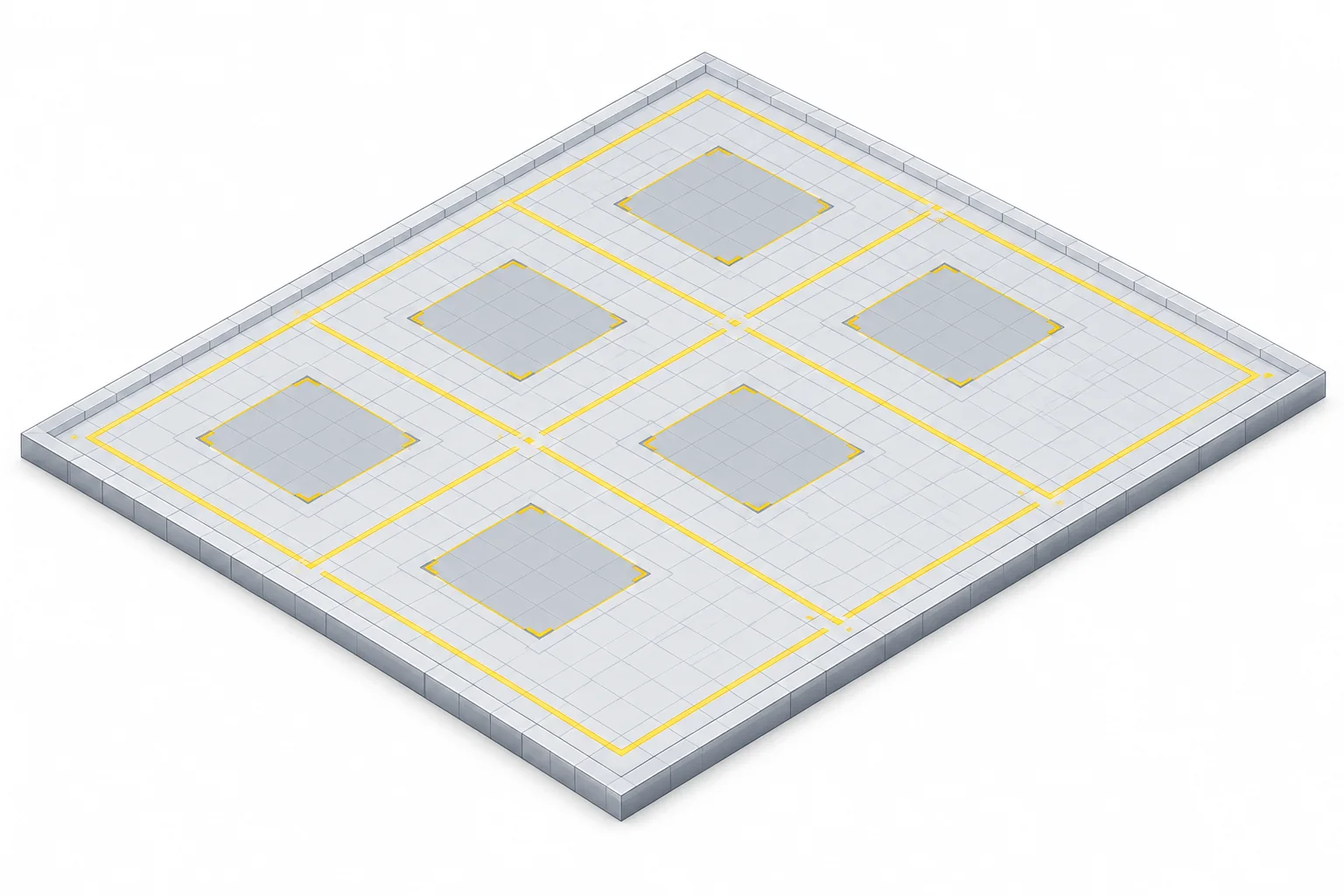
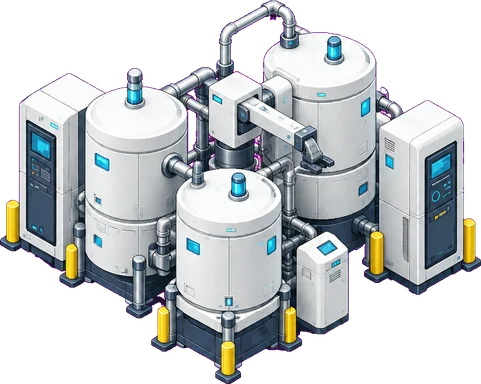
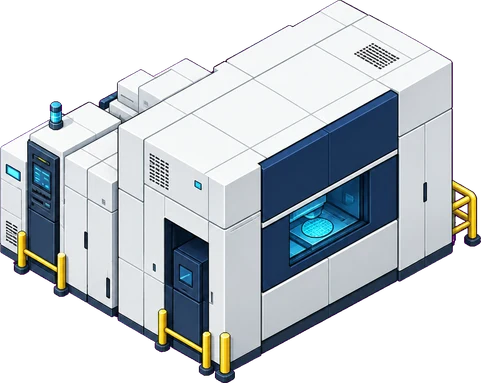
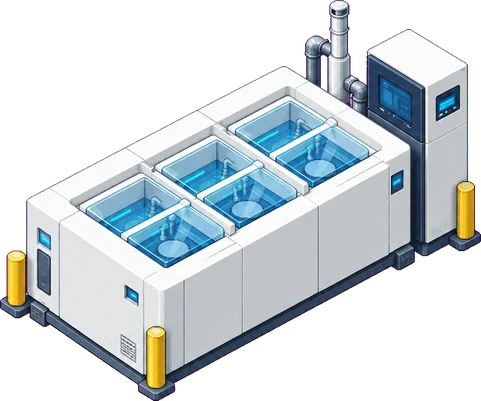
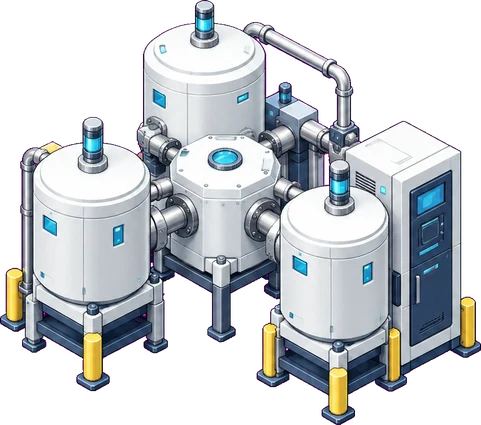
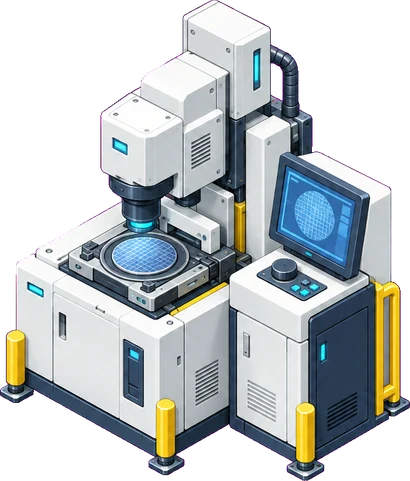
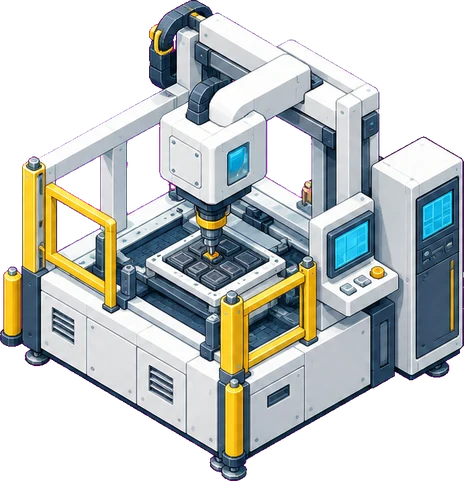
Educational diagram. Actual factory layouts and equipment proportions differ, and many processes repeat.
Front-end fabrication
Etching
Selectively remove material while protecting the parts that must remain.
Concept diagram · not to scale
Related companies
Applied Materials
Semiconductor manufacturing equipment for deposition, material removal, and analysis
Lam Research
Etching technology and equipment, including plasma and selective etching
Tokyo Electron
Manufacturing equipment for deposition, coating/development, etching, and cleaning
Process explanation
Etching removes material according to a pattern to create structures such as grooves and holes. Methods differ, including dry etching with plasma and wet etching with liquid chemicals. Controlling depth, shape, and selectivity between materials helps limit damage to structures that must remain.
Industry perspective
Why it matters
This stage examines whether complex structures can actually be produced. Defects and processing speed, as well as equipment precision, matter when assessing productivity.
Indicators to watch
Are the materials to remove sufficiently distinguished from those to preserve?
Are shape and uniformity maintained even in deep structures?