The difference between a smooth demo and a profitable workplace: connect perception, control, learning, actuation, safety, and operations to understand bottlenecks and economics.
Select a point to explore the industrial flow, bottlenecks and related companies.
How to read this map
Physical AI connects intelligence that perceives surroundings and selects physical actions to real machines. Not every industrial robot uses learning-based AI, and the term does not only mean humanoids. Read through task definition → perception → computation/control → actuation → site integration → operation → performance measurement. Simulation and data form separate feedback loops across multiple stages. Lines indicate functional dependencies, not contracts or supply chains between companies.
Tasks and economics → Perception and sensors · Tasks and items define observation requirements
Perception and sensors → Computation and control · Plan and control actions from observed states
Computation and control → Actuation and grippers · Execute through commands the drive system can perform
Actuation and grippers → Site integration and safety · Integrate mechanisms with actual equipment and safety systems
Site integration and safety → Operation and recovery · Operation and recovery after on-site validation
Operation and recovery → Performance and reinvestment · Record actual tasks, interventions, and costs
Performance and reinvestment → Tasks and economics · Reassess economics and bottlenecks
Learning and simulation → Perception and sensors · Validate observation conditions and failure types
Learning and simulation → Computation and control · Validate connections among policies, paths, and control
Learning and simulation → Site integration and safety · Support pre-validation without replacing site assessment
Operation and recovery → Learning and simulation · Feed field failures into retraining and retesting
Actuation and grippers → Perception and sensors · Observe action outcomes again
Site integration and safety → Computation and control · Constrain permitted actions, stops, and recovery conditions
Tasks and economics → Learning and simulation · Define tasks, items, and environments to validate
Map limitations
An abbreviated educational map based on official technology and product materials. Company descriptions establish that features exist, not independent performance verification or universal profitability. Economic significance, watch points, and counterarguments are the editor’s conditional analysis. Actual adoption, profits, or safety certification of any model are not guaranteed. OSHA material is a US industrial-robot safety reference, not legal guidance directly applicable to Korean rules or every mobile robot or humanoid. Current site-specific rules and risk assessments must be checked separately. This is not an earnings or share-price forecast or investment recommendation.
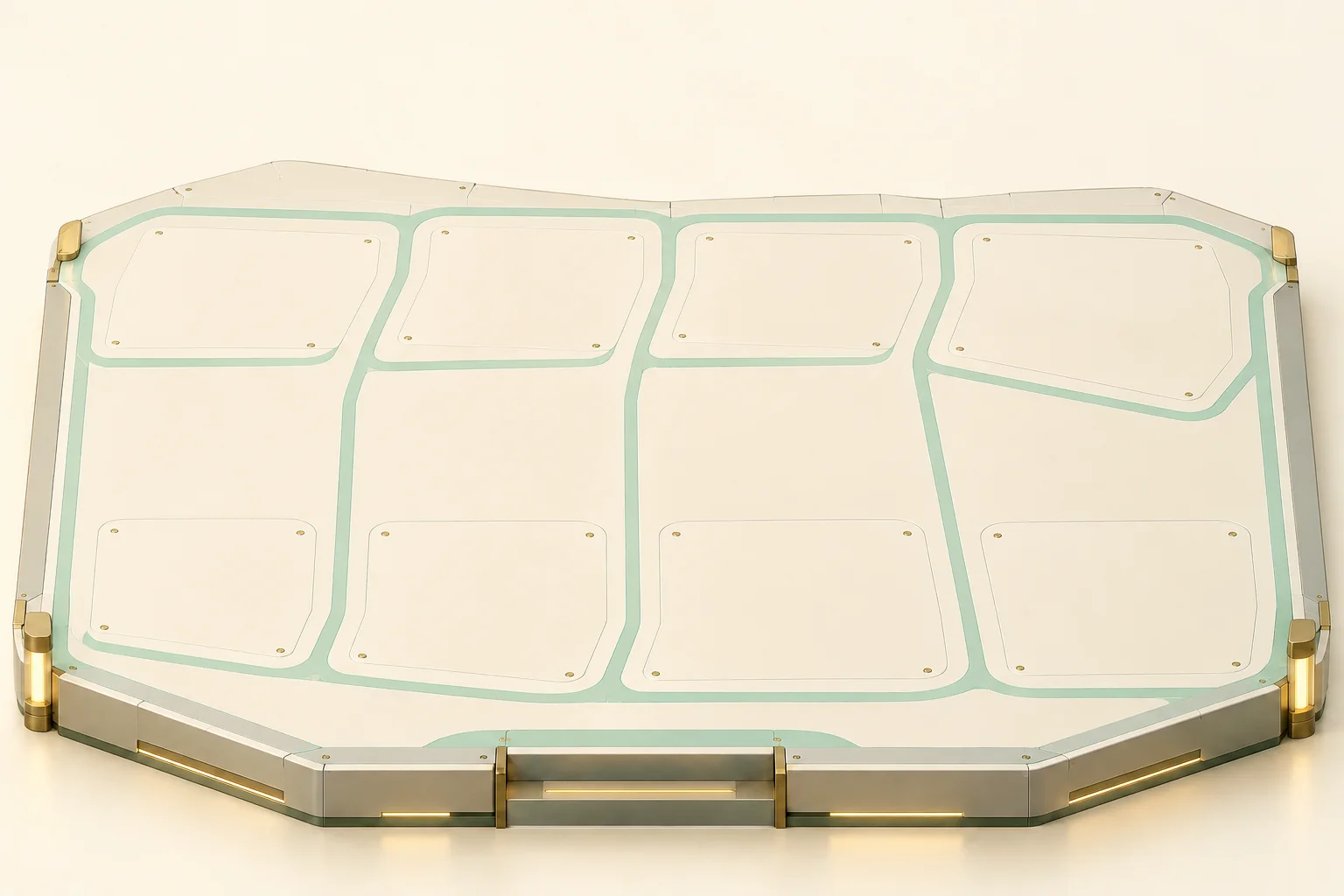
Educational industry diagram, not a reproduction of actual layouts, geography or operating routes.
Validation feedback
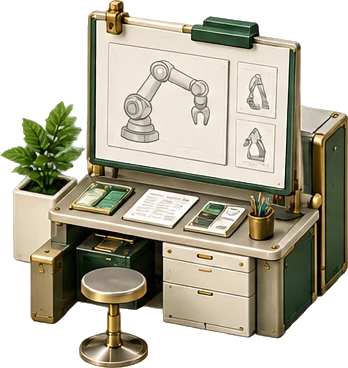
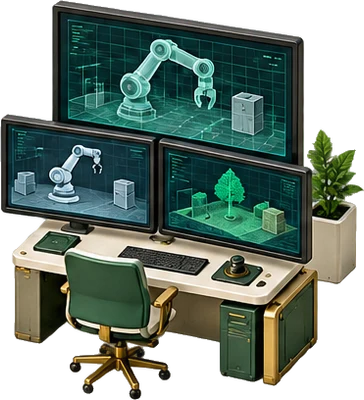
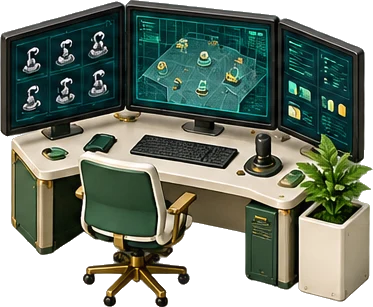
Learning and simulation
Find failure conditions virtually and in field data to revise policies and designs.
Why it matters
Analytical perspective: simulation’s value lies in finding failures early and lowering retest costs, rather than impressive videos. Recorded field failure types must inform later validation for accumulated data to produce actual improvement.
Related companies
NVIDIA
Isaac Sim robot simulation and synthetic data, and the Jetson edge-AI platform
ABB Robotics
RobotStudio virtual-controller-based programming, paths, and motion verification
Explanation
NVIDIA Isaac Sim supports physics-based robot simulation, validation, and synthetic-data generation; its official learning materials cover sensors, ROS 2, and software/hardware integration checks. ABB RobotStudio provides virtual-controller-based path, collision, and motion analysis. Synthetic data supplements real data. Gaps between virtual validation and the site remain depending on how faithfully friction, contact, component variation, and lighting are represented.
Industry perspective
Indicators to watch
Was testing performed under field conditions not used for training?
Were virtual friction, loads, and sensor settings compared with measurements?
Does regression testing verify prior-task performance after updates?