
Dialogue
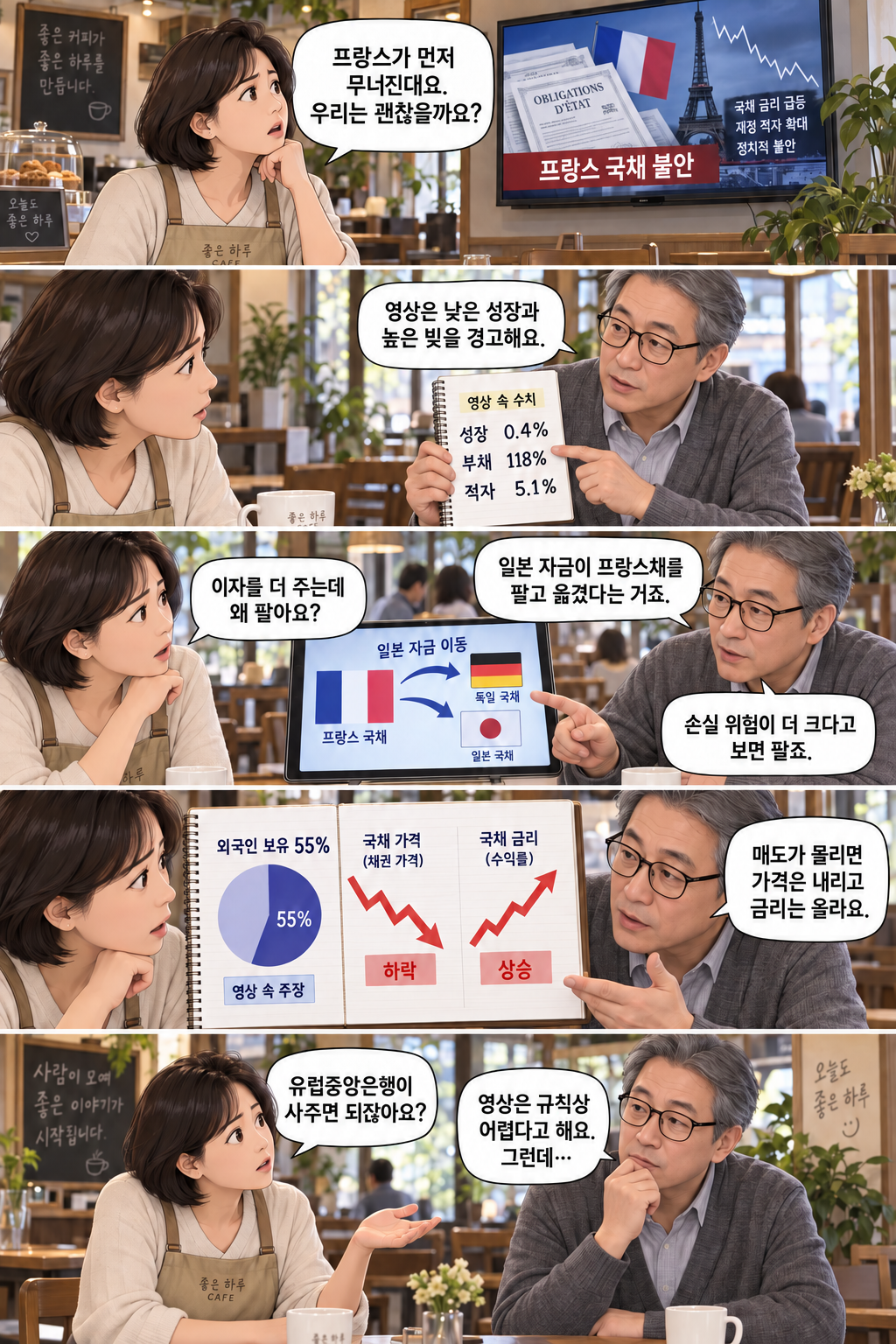
They say France will collapse first. Will we be okay? The video warns about low growth and high debt. Figures in the video: growth 0.4%, debt 118%, deficit 5.1%. It says Japanese capital sold French bonds and moved elsewhere. Why sell when the interest rate is higher? They sell if they see an even greater risk of loss. Foreign holdings 55%—a claim from the video. When selling piles up, prices fall and yields rise. Can’t the European Central Bank buy them? The video says the rules make that difficult. But…

Dialogue
There is a conditional purchase mechanism, the TPI. Fiscal and debt conditions and a Governing Council assessment are required. It addresses market disorder obstructing policy transmission—not automatic rescue. The remedy is not the same as for the currency crisis in 97. 1997 Korea: foreign-currency liquidity. France: fiscal conditions and borrowing costs. Japanese capital leaving alone does not establish the same crisis. Does that mean Korea is safe? The crisis channels differ. Demographic and growth warnings remain. Existing holders: falling prices. New buyers: higher yields and risks. Taxpayers: higher interest burdens. The same yield increase, different financial outcomes. I will watch the spread over German bonds, budget votes, and sovereign issuance results. Fiscal agreement and a growth recovery too. ECB intervention is conditional. Worse: deadlock, wider spreads, weak issuance. Better: fiscal agreement, growth recovery, conditional intervention.