
Dialogue
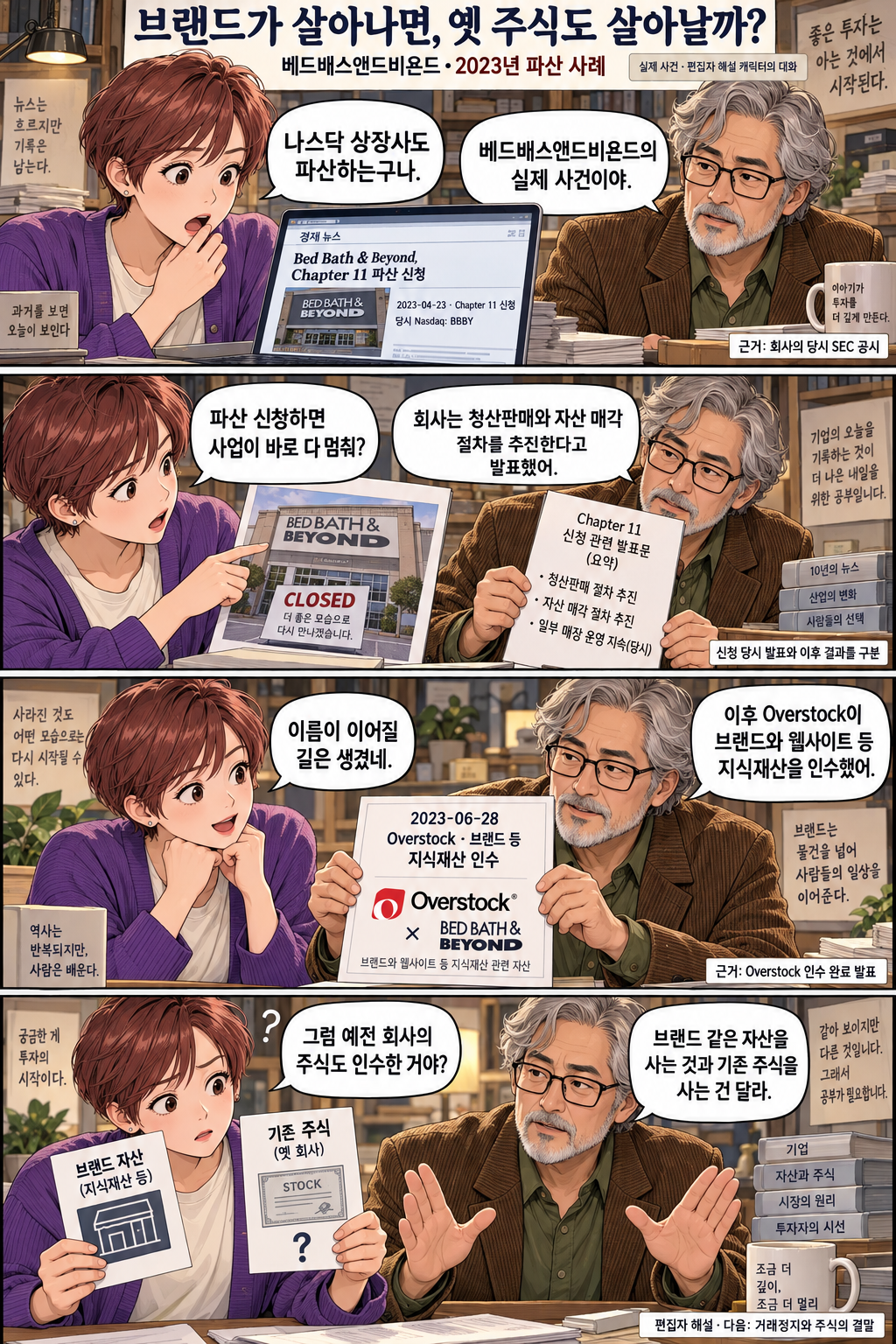
If the Brand Survives, Do the Old Shares Survive Too? Bed Bath & Beyond · A 2023 bankruptcy case Actual events · A conversation between editorial guide characters Document: 2023-04-23 · Chapter 11 filing · Nasdaq at the time: BBBY. Questioner: Even a Nasdaq-listed company can go bankrupt. Explainer: This is the actual Bed Bath & Beyond case. Questioner: Does filing for bankruptcy stop the entire business immediately? Explainer: The company announced that it would pursue liquidation sales and an asset-sale process. Distinguish the announcement at filing from subsequent outcomes. Document: 2023-06-28 · Overstock · Acquisition of the brand and other intellectual property. Explainer: Overstock subsequently acquired intellectual property, including the brand and websites. Questioner: That created a path for the name to continue. Questioner: Did it acquire the old company's shares too? Explainer: Buying assets such as a brand differs from buying existing shares. Editorial explanation · Next: Trading suspension and the shares' outcome
Dialogue
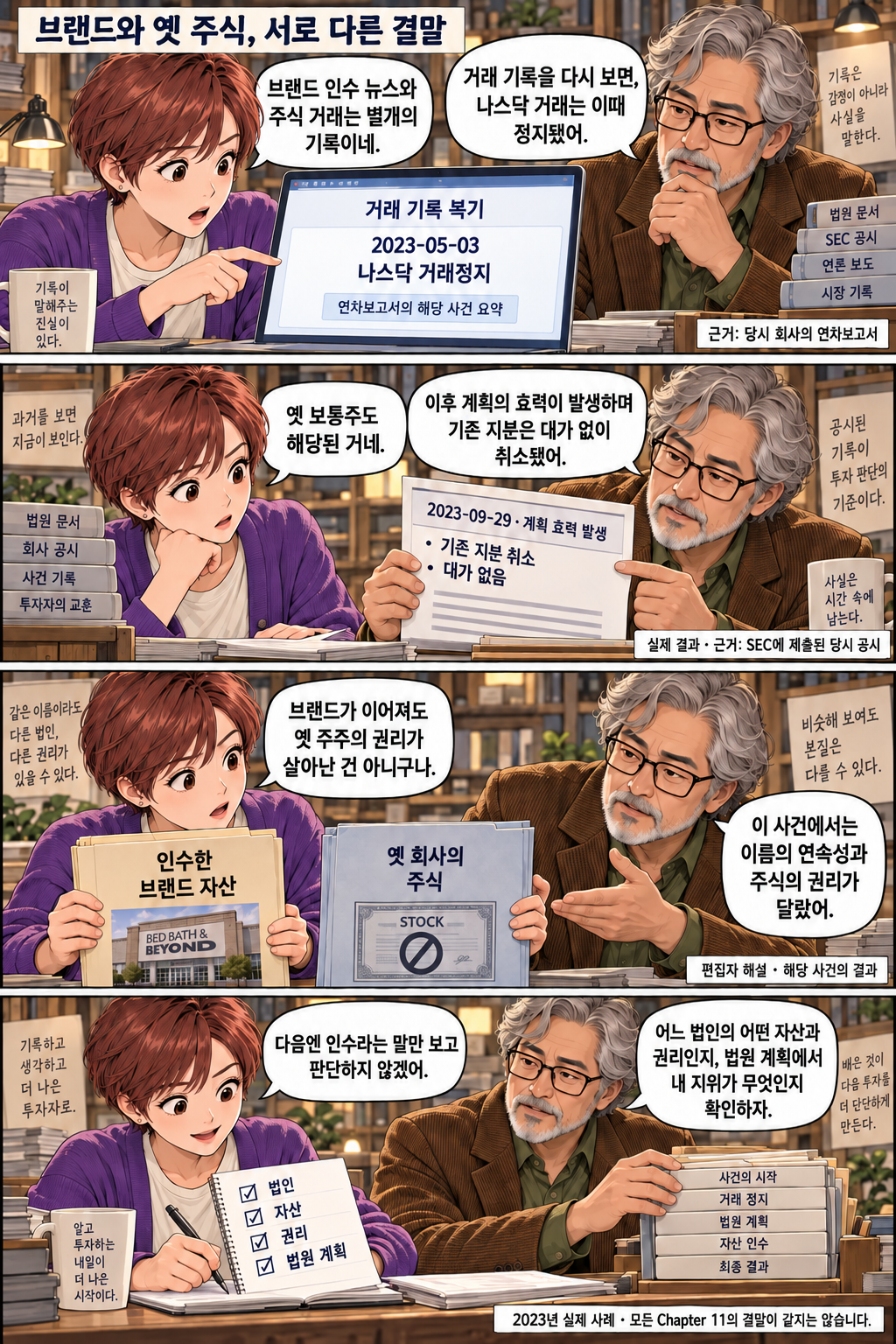
The brand and old shares: Different outcomes Revisiting the trading record: 2023-05-03 · Nasdaq trading suspended · Summary of the event in the annual report. Explainer: Looking back at the trading record, Nasdaq trading stopped at this point. Questioner: Brand acquisition news and share trading are separate records. Document: 2023-09-29 · Plan effective · Existing equity cancelled · No consideration. Explainer: The plan subsequently became effective, cancelling existing equity without consideration. Questioner: That included the old common shares. Questioner: The brand continuing did not revive the old shareholders' rights. Explainer: In this event, continuity of the name and rights in the shares differed. Editorial explanation · The outcome of this particular event. Questioner: Next time, I won't judge just from the word acquisition. Explainer: Check which legal entity, which assets and rights, and what your position is under the court plan. Legal entity · Assets · Rights · Court plan An actual 2023 case · Not every Chapter 11 ends the same way.